
Today, in the face of ecological and climate disruptions, the Charlois Fund for Art and the Forest reaffirms its active role in forest preservation and restoration.
It is no longer just a question of preserving the material, but of preparing the future of the oak: observing, understanding, and supporting its development. It is in this spirit that the Charlois Fund’s Quercetum was born — a comprehensive project that brings together nature, tradition, research, and science.
The Quercetum project aligns with the Charlois Fund’s mission to take concrete action for the future of the oak and to pass on a botanical, cultural, and human heritage to future generations.
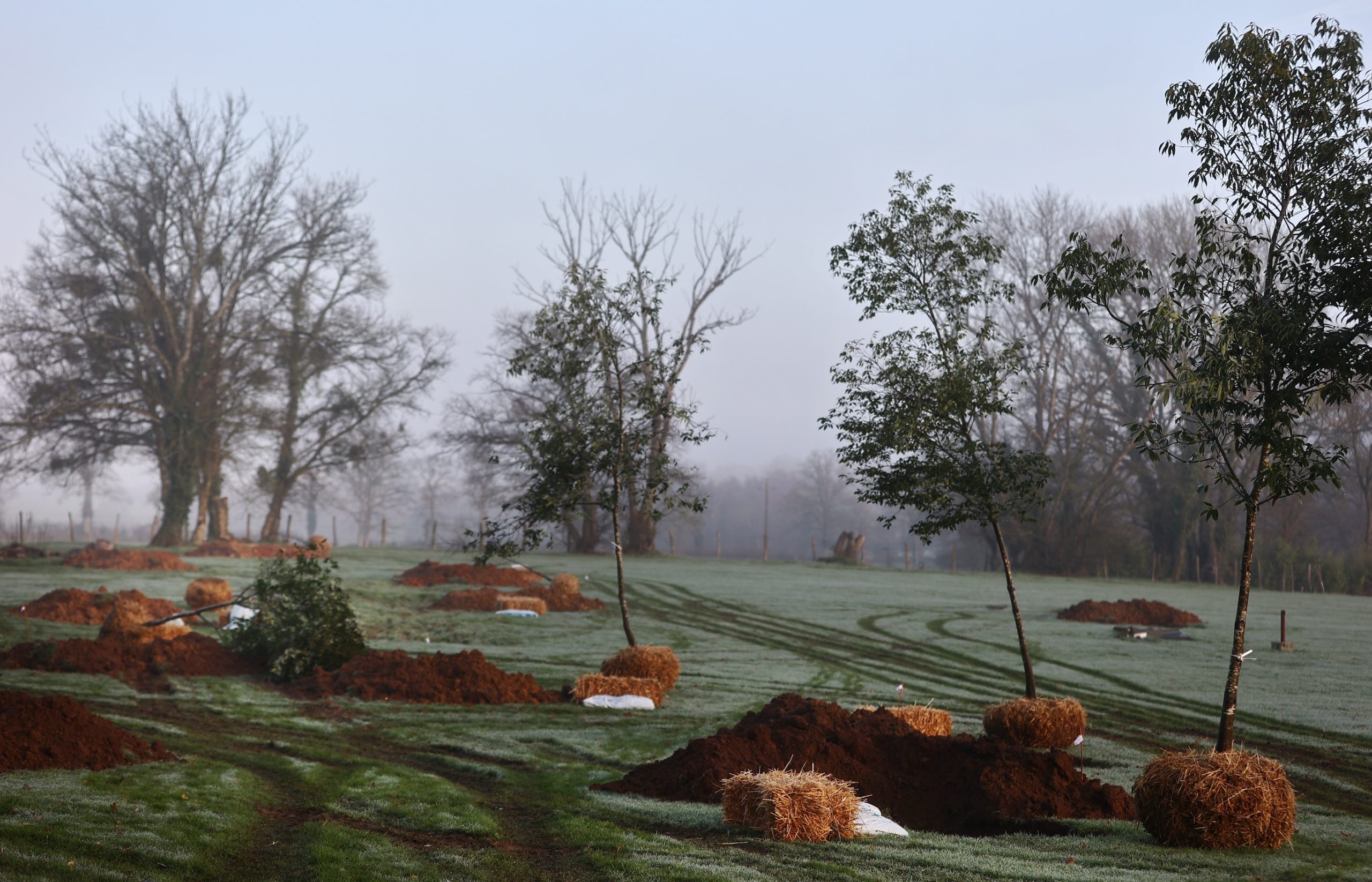
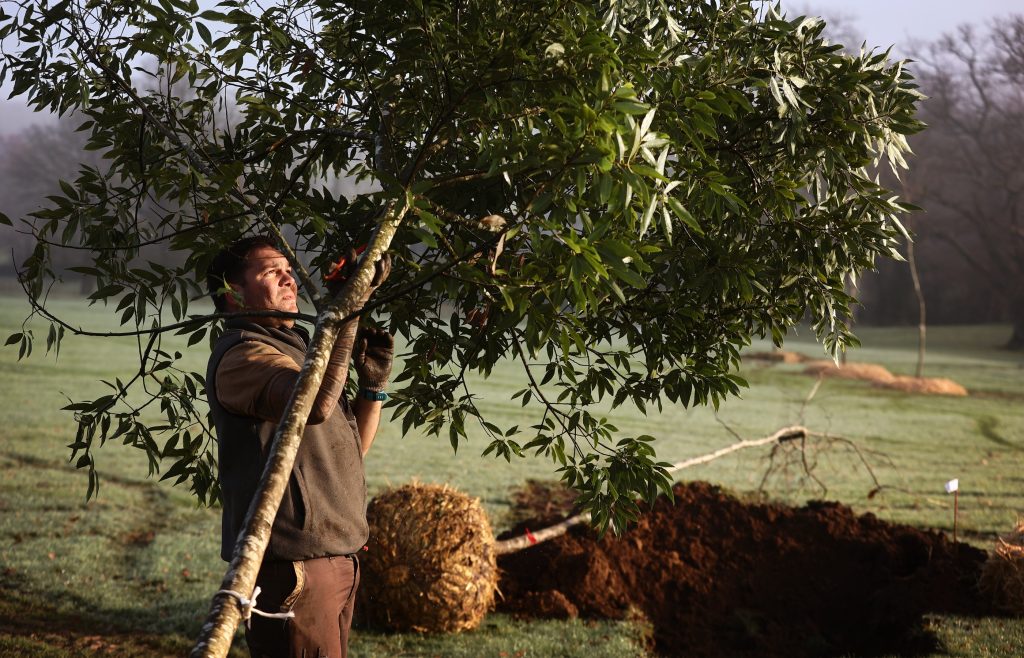
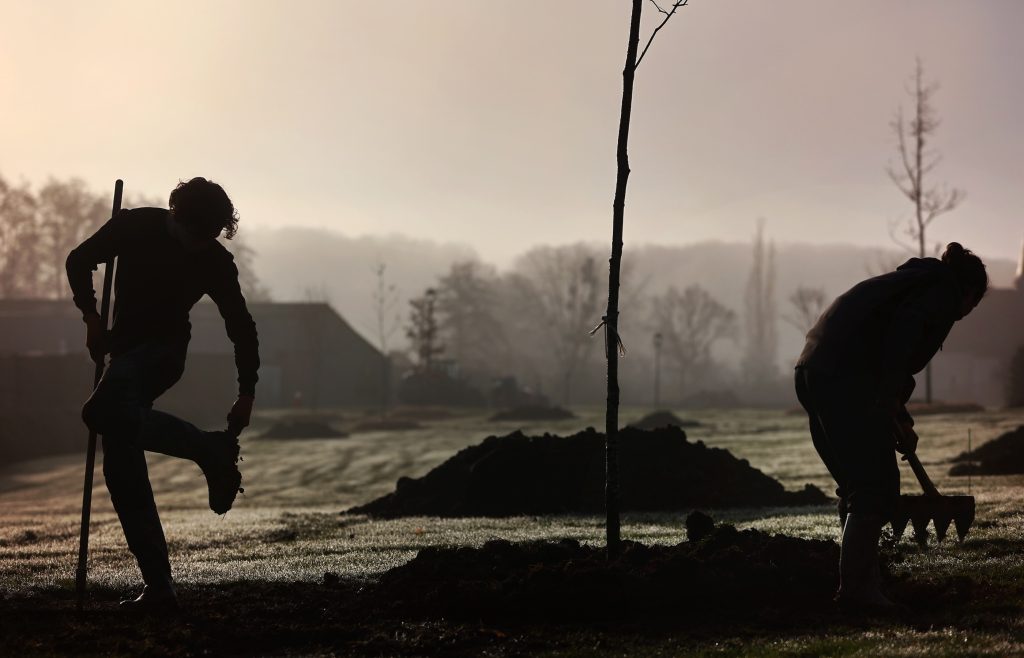
Phase 1 – Murlin, December 2025
Phase 1 of the Quercetum began in Murlin in December 2025. During this first stage, around forty trees were planted, including: Japanese oak (Quercus acutissima), swamp white oak (Quercus bicolor), chestnut-leaved oak (Quercus castaneifolia), bamboo-leaved oak (Quercus myrsinifolia), willow oak (Quercus phellos), Chinese cork oak (Quercus variabilis), Shumard oak (Quercus shumardii), black oak (Quercus velutina), swamp post oak (Quercus lyrata), American white oak (Quercus alba), Trojan oak (Quercus trojana), water oak (Quercus nigra), valley oak (Quercus lobata), Phillyrea-leaved oak (Quercus phillyreoides), shingle oak (Quercus imbricaria), and Texas red oak (Quercus texana).
These oaks, selected by Vincent Brunet, come from the Quercus Nursery. The selection was made according to soil types. Planting multiple species is also essential to preserve biodiversity and strengthen ecosystem resilience. This diversity promotes healthier soils, reduces the risk of disease, and ensures more sustainable forests in the face of climate change.
In Murlin, the program, which will span five years, will ultimately include 360 oaks of 40 different species.
This project, expected to span several decades and multiple sites around the world, aims to study the evolution of the species while creating ecosystems that promote biodiversity.
A Living & Sustainable Vision for Oak Tomorrow
The Quercetum is more than just an arboretum: it is an open-air laboratory dedicated to the study of oak.
It brings together, across multiple locations:
- A unique collection of oak varieties from around the world (ultimately representing over 400 species and varieties), studied for their climate adaptability as well as their mechanical, aromatic, and biological properties.
- An applied research program focusing on future tree species, soil–climate interactions, drought resistance, and the uses of oak in cooperage, construction, cosmetics, and even gastronomy.
- A global geographic network, offering a diversity of soils and climates (located in Murlin and at various sites in France, Spain, Romania, Scotland, and the United States).
- An experimental and educational space, open to knowledge sharing, scientific collaboration, and the promotion of living ecosystems.
The Charlois Fund’s Quercetum thus becomes a center for oak research and experimentation, complementing the living heritage skills it already showcases. It will be made available to partner institutions for experiments related to climate disruption.
We will keep you updated through the seasons, throughout the plantings and the ongoing development of this long-term project!
Photos © Christophe Deschanel

